


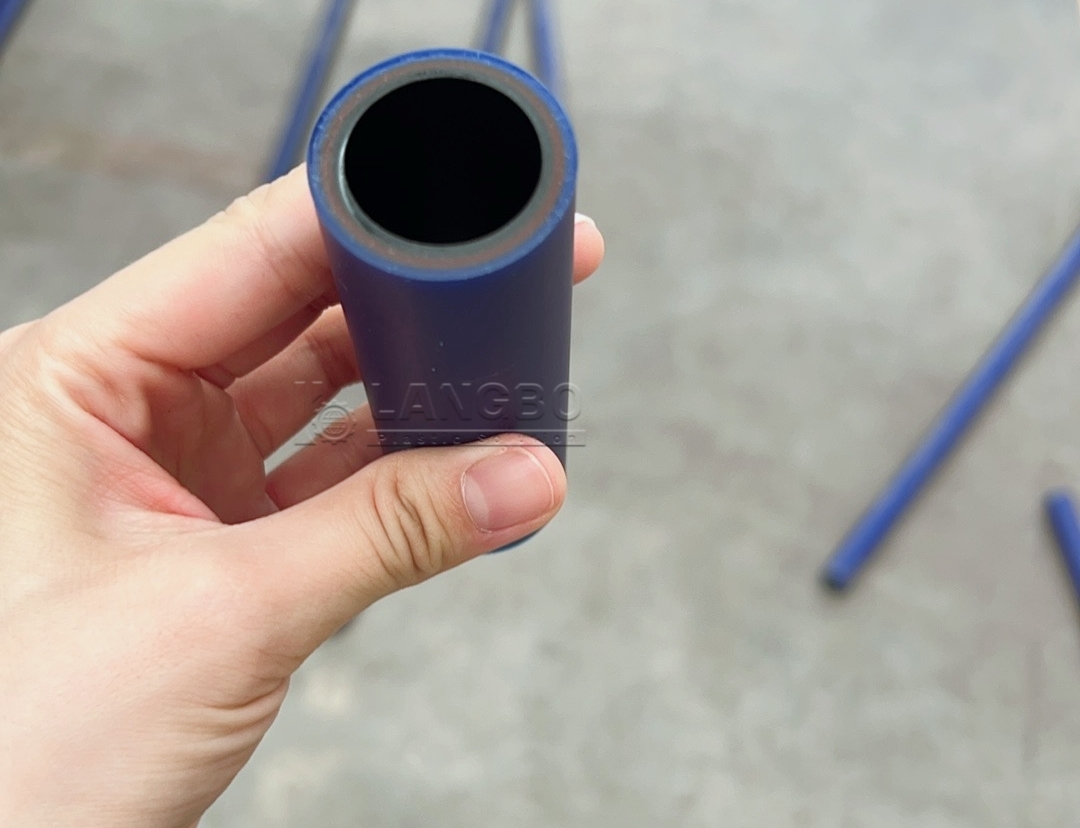
Application de ligne d'extrusion de tuyaux PPR dans le système de plomberie des bâtiments du Pakistan
Publié le: June 22, 2026
Au Pakistan, la demande de modernitésystèmes de plomberie du bâtimentcontinue de croître, tirée par le développement de logements résidentiels, l’expansion des infrastructures urbaines et les projets de construction commerciale. Les tuyaux PPR sont largement utilisés en raison de leur adéquation aux systèmes de distribution d’eau chaude et froide dans les bâtiments.
Cependant, les fabricants locaux sont souvent confrontés à des difficultés lorsqu’ils augmentent leur production.compatibilité de production continueenvironnements, en particulier lors de l’intégration de l’extrusion, de l’étalonnage, du refroidissement et de la manipulation en aval dans un flux de production stable.
Dans ce projet, le fabricant s'est concentré sur la fourniture de tuyaux PPR pourapplications du système de plomberie du bâtiment, où la cohérence et la fiabilité des dimensions des tuyaux sont essentielles.
Les principaux défis comprenaient :
- Difficulté à maintenir une production stable pendant des cycles de production continus
- Fluctuation des dimensions des tuyaux lors d'opérations d'extrusion de longue durée
- Coordination limitée entre l'extrusion en amont et la manutention en aval
- Performances incohérentes lors du basculement entre différentes spécifications de tuyaux
Ces problèmes ont affecté la continuité de la production et la fiabilité des installations en aval.
La ligne de production est conçue pourcompatibilité de production continue, où toutes les sections du système doivent fonctionner dans des conditions synchronisées.
Le système comprend :
- Unité d'extrusion de tuyaux PPR pour un traitement de fusion stable
- Réservoir d'étalonnage sous vide pour le contrôle dimensionnel
- Système de refroidissement pour la stabilisation structurelle
- Unité de transport pour contrôle synchronisé de la vitesse de ligne
- Système de coupe pour une sortie à longueur fixe
L'objectif est de maintenir un flux de production ininterrompu tout en prenant en charge différentes tailles de tuyaux utilisés dans les systèmes de plomberie des bâtiments.
Pour remédier à l'instabilité de la production, la ligne d'extrusion de tuyaux PPR a été optimisée en mettant l'accent sur la coordination continue du système.
Les principaux ajustements techniques comprenaient :
- Synchronisation de ligne basée sur PLC pour les unités d'extrusion et en aval
- Contrôle stable de la température dans les étapes d'extrusion et d'étalonnage
- Vitesse de transport coordonnée pour correspondre au comportement de sortie de fonte
- Paramètres de production modulaires pour différentes spécifications de tuyaux utilisés dans les systèmes de plomberie du bâtiment
Cette configuration a amélioré la coordination du système tout au long de la chaîne de production.

Après l'intégration et l'ajustement du système, la ligne de production a démontré une stabilité améliorée dans des conditions de fonctionnement continu.
Les résultats observés comprenaient :
- Production de tuyaux plus constante pendant les longs cycles de production
- Coordination améliorée entre l’extrusion et les processus en aval
- Comportement dimensionnel stable adapté aux applications de plomberie du bâtiment
- Meilleure adaptabilité aux exigences de production continue
Le système a maintenu un fonctionnement stable sur plusieurs équipes de production.
Le système d'extrusion PPR optimisé est largement applicable dans le secteur du bâtiment au Pakistan, notamment :
- Systèmes d'approvisionnement en eau résidentiels
- Réseaux de distribution d'eau chaude et froide
- Installations de plomberie pour bâtiments commerciaux
- Projets d'infrastructures résidentielles urbaines
Une production stable de tuyaux garantit la compatibilité avec les exigences d’installation dans les systèmes de plomberie des bâtiments.
Ce cas au Pakistan démontre que l’obtention de performances stables dansapplications du système de plomberie du bâtimentdépend fortement du maintiencompatibilité de production continuesur toute la ligne d’extrusion de tuyaux PPR.
En améliorant la synchronisation du système et en stabilisant le contrôle des processus, les fabricants peuvent garantir une production de canalisations plus cohérente et un meilleur alignement avec les exigences du secteur de la construction.

